


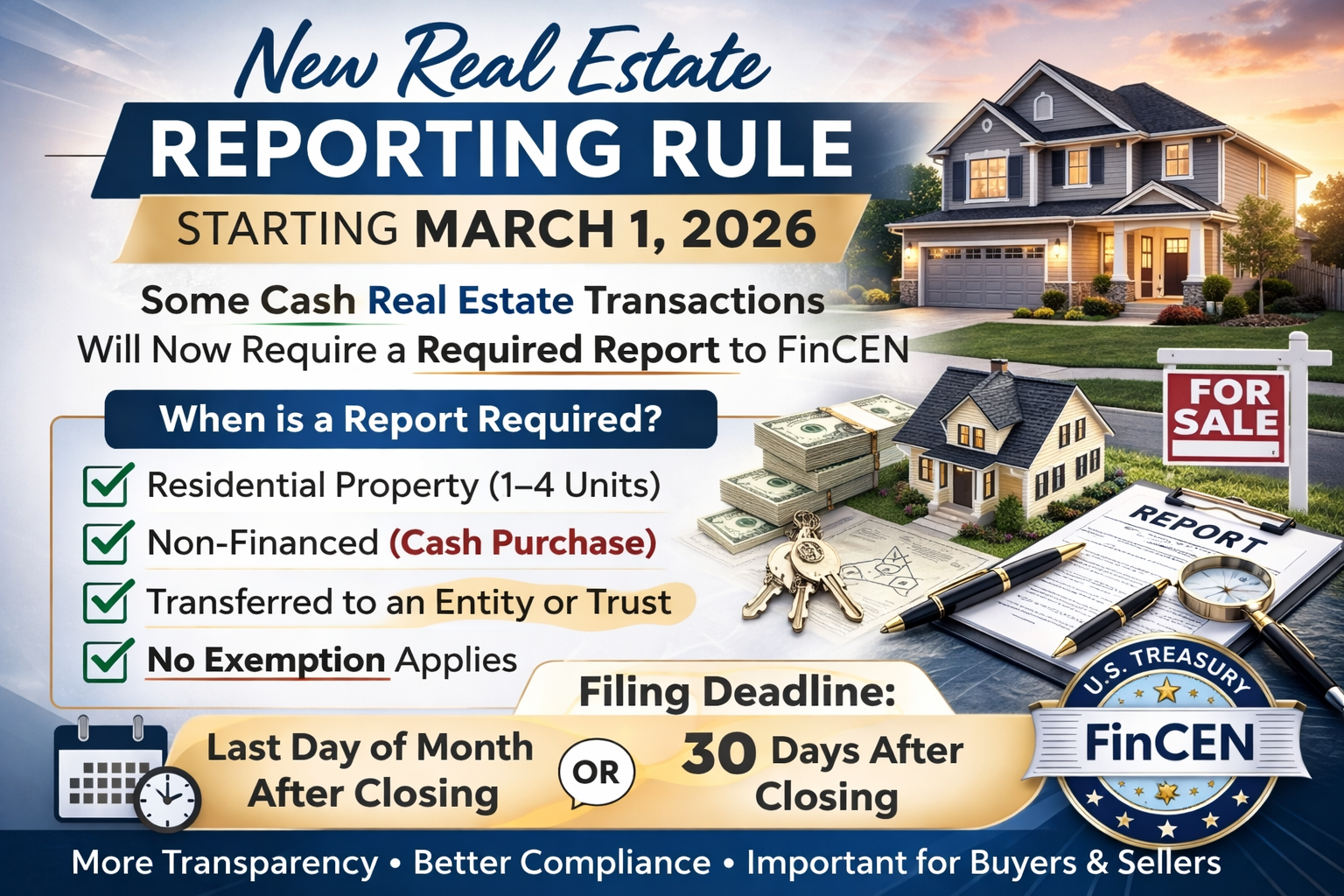
New Real Estate Reporting Rule Starting March 1, 2026: What Buyers and Investors Should Know
Beginning March 1, 2026, certain real estate professionals involved in closings and settlements will be required to report specific information to the U.S. Treasury’s Financial Crimes Enforcement Network (FinCEN) for certain non-financed residential real estate transactions.
This rule is designed to improve transparency in certain real estate purchases. Most traditional home purchases that involve a mortgage will not be affected. However, buyers and investors purchasing property with cash or through entities should understand how this rule may apply.
When Does a Transaction Need to Be Reported?
A transfer is generally reportable when all of the following conditions apply:
• The property is residential real estate
• The transfer is non-financed (a cash purchase)
• The property is transferred to an entity or trust
• No exemption applies
What Counts as Residential Real Estate?
Residential real estate generally includes:
• Single-family homes
• Multi-family properties up to four units
• Condominiums or residential units within a building
• Land intended for construction of a one-to-four family residential property
What Is the Filing Deadline?
If reporting is required, the report must be submitted by:
• The last day of the month following the closing date, or
• Within 30 days after closing
Whichever comes later.
Why This Matters for Michigan Buyers and Investors
For buyers and investors purchasing property in Macomb County, Oakland County, and Southeast Michigan, this rule is most relevant for:
• Cash real estate purchases
• Purchases made through an LLC or other entity
• Purchases made through a trust
• Certain investment transactions
Understanding how these rules apply before closing can help prevent delays and ensure compliance with federal reporting requirements.
If you have questions about buying, selling, or investing in real estate in the following communities, I would be happy to help guide you through the process.
Frequently Asked Questions About the 2026 Real Estate Reporting Rule
Does this rule change how most homes are bought and sold?
No. Most residential real estate transactions involve mortgage financing and will not be affected. The rule mainly applies to certain cash purchases made through entities or trusts.
Will this create delays when buying or selling a home?
For most transactions, buyers and sellers will not notice any change. When reporting is required, the responsibility typically falls on the closing professional handling the settlement.
Why is the government creating this reporting requirement?
The rule was designed to increase transparency in certain types of real estate transactions, particularly cash purchases made through entities where ownership can sometimes be difficult to trace for the purpose of tracking money laundering and others.
Does this apply to investors who buy property with an LLC?
In some cases it may. Investors who purchase residential property with cash through an LLC, partnership, or trust may fall under the reporting requirements depending on the structure of the transaction.
Does this rule affect buyers using a mortgage loan?
No. Transactions that involve traditional mortgage financing are generally excluded from the reporting requirement.
• Macomb Township
• Shelby Township
• Utica
• Chesterfield Township
• Washington Township
• Clinton Township
• New Haven
• New Baltimore
• Rochester Hills